
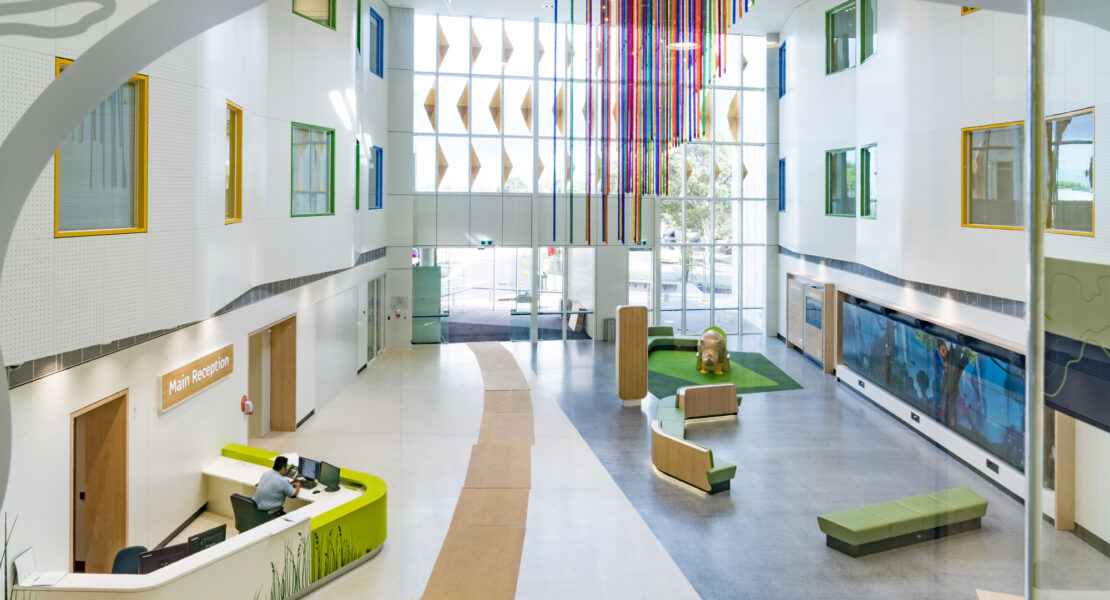
Immersive and distraction technologies are becoming an increasingly important consideration in the design of healthcare environments. But where should they actually be used, and what should they achieve?
In our latest article, we explore some of the key design and deployment considerations for immersive and distraction technologies in hospital waiting areas, foyers, and clinical spaces.
Immersive and Distraction Technologies in Healthcare: Key Design Considerations
Why Immersive and Distraction Technologies Matter
For many patients, especially children, a visit to a hospital is synonymous with anxiety, uncertainty, and fear. Long waiting periods, unfamiliar surroundings, and complex clinical workflows, can all foster a sense of foreboding that extends beyond a patient’s medical condition.
In the last decade, health services have developed an appreciation for designing environments that support a positive patient experience alongside clinical care. The desire to make the patient experience more comfortable has driven an interest in immersive and distraction technologies that aim to reduce patients’ anxiety and create more welcoming (and playful) healthcare spaces.
In our experience, we have found that successful immersive environments or distraction solutions are not always defined by the “newness” of the technology itself. Instead, the success of immersive and distraction technology is often due to thoughtful planning, design, and multidisciplinary coordination to produce the desired clinical outcomes.
Understanding Immersive and Distraction Technologies
The terms immersive and distraction are often used interchangeably, however they can serve very different purposes within a healthcare environment. Understanding this distinction is important, as the desired clinical outcome should ultimately drive the selection of the technology solution. These technologies may be defined as follows:
Immersive Technology:
- Technology in the context of an immersive environment is often designed to draw patients in, surround them, and make them feel like they are part of an experience. Technology can accomplish this via visual, auditory, or interactive experiences using projection systems, LED displays, dynamic lighting, spatial audio, or the close coordination of the above.
Distraction Technology:
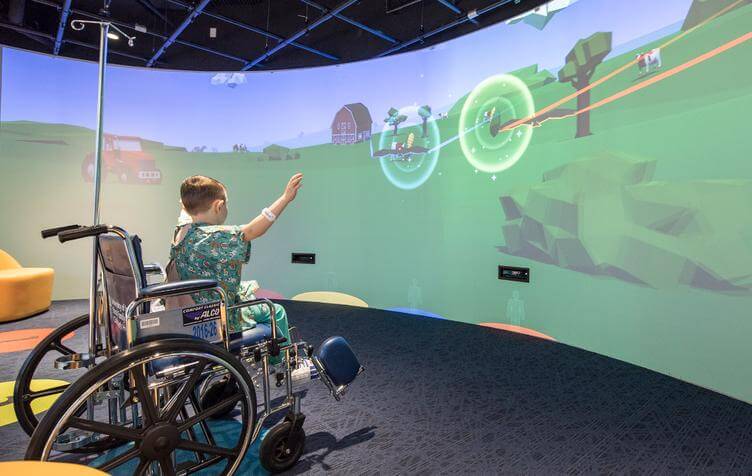
- Distraction technology’s purpose is to divert a patient’s attention away from anxiety, discomfort, or alleviate the frustration of long waiting times. Distraction technology solutions may be passive, like digital artwork or nature scenes, or interactive like a game system.
Distinguishing between immersive and distraction technology solutions is important because any technology solution should only be deployed to support a defined clinical objective.
A calming MRI preparation room, an engaging paediatric waiting area, or a welcoming hospital foyer may all utilise immersive or distraction technologies, yet each requires considering the clinical and operational objectives motivating its deployment.
Technology should never be deployed for its own sake.
Start with the Clinical Objective, Not the Technology
It’s important that the technology itself never drives the design process, no matter how exciting it may appear. We see this often on major projects, where there is a propensity to explore the latest innovations, including artificial intelligence, holographic displays, augmented reality, etc. without connecting the technology to a defined clinical objective.
An objective-first approach ensures the technology solution facilitates an improved clinical outcome and patient experience, rather than serving merely as a novel feature with no real connection to the hospital’s workflow.
Some potential clinical outcomes may include:
- Reducing patient anxiety prior to a procedure
- Improving cooperation during diagnostic imaging
- Shortening the perceived duration of waiting
- Creating opportunities for age appropriate play
- Encouraging movement during extended hospital stays
- Providing positive distractions during painful procedures
- Supporting family engagement within healthcare environments
Once clinical objectives have been established, an appropriate technology solution, which aligns with the clinical requirements, available space, operational model, budget, and any ongoing maintenance or facility management implications, can then be designed or assessed for deployment.
Different Spaces Require Different Solutions
Every space has different clinical requirements and spatial considerations
There is no one size fits all approach for immersive or distraction technology solutions that is suitable for every healthcare environment. Instead, each space must be considered in combination with its clinical objective. The following are some of the spaces where immersion or distraction technologies are commonly deployed, and some high level design considerations:
Main Foyer
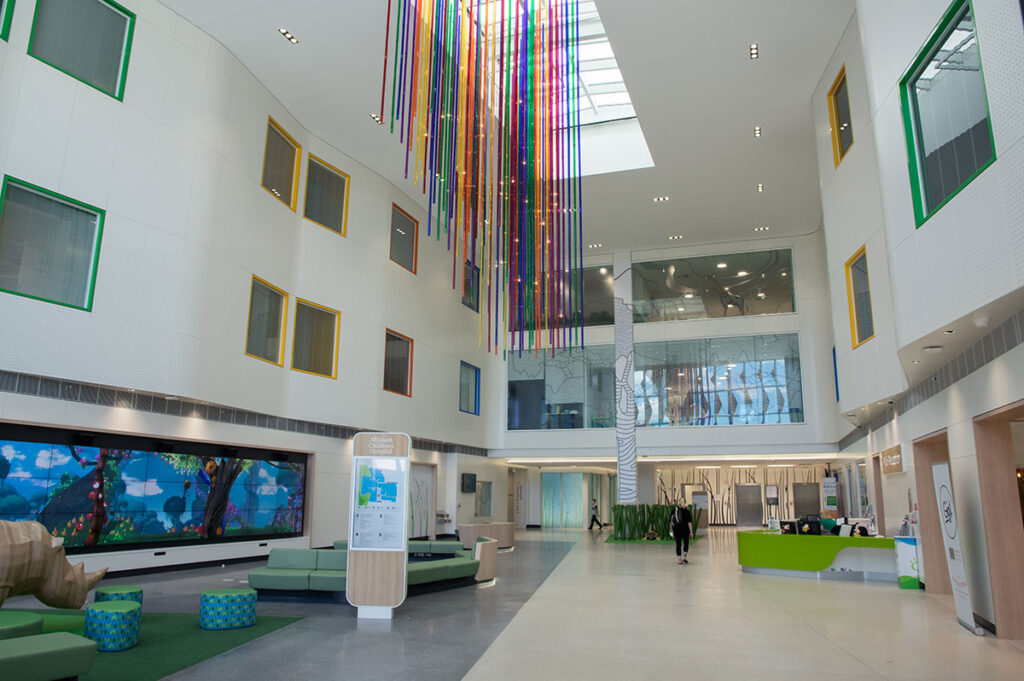
Hospital foyers create a critical first impression for patients and visitors. While they are typically transient spaces, where people are moving towards an end destination, rather than waiting for an extended period, they form a crucial part of the patient journey and experience.
Large format digital displays can create engaging arrival experiences, showcase donor recognition, communicate hospital information, or provide interactive content for children.
Interactive floor or wall projection may also be appropriate; however, these systems must be carefully considered to ensure they do not limit the flow and movement of people. Interactive experiences naturally encourage viewers to stop, gather, or play, which may conflict with the movement flow expected within a busy entrance or foyer space.
For foyer areas, the physical footprint of the technology and the flow of traffic throughout the space must be considered during the planning and design process.
Waiting Areas
Distraction technology solutions are often deployed into waiting areas. Unlike foyers, patients and families are often expected to wait in these areas for a substantial amount of time. In addition, this waiting period can be stressful and therefore distraction technology can play both an important role in reducing perceived waiting times, and minimising patient stress.
Interactive projections, digital displays, sensory installations, games, or passive visual content may all be appropriate depending on the patient type.
For paediatric waiting areas, interactive experiences often encourage exploration and play, while adult waiting rooms may benefit from more calming visual content designed to reduce stress rather than stimulate activity.
In addition, an elegant distraction solution provides health services with greater control over the content being presented to patients and visitors. Reliance on free-to-air television alone may result in content being displayed that is not age appropriate, clinically appropriate, or aligned with the intended patient experience. A curated distraction solution ensures content remains suitable for the intended patient cohort while supporting the creation of a safe, welcoming, and therapeutic environment.
Clinical Spaces
Clinical spaces like procedure rooms, imaging suits, and treatment spaces may have entirely different technology requirements. In these environments, the technology should directly support the defined clinical outcome being sought.
For example, MRI, CT, or ultrasound examinations may cause undue stress in some patients. However, ambient experience systems that integrate displays, lighting, and audio may be deployed to create calming environments that facilitate the examination process. The deployment of these systems has demonstrated benefits in reducing patient anxiety, ensuring patients are clam and can cooperate throughout the imaging process.
In some instances, the deployment of an appropriate technology solution may reduce the need for sedation in paediatric patients, improving their experience and clinical workflows.
Technology is Only One Part of the Experience (Coordination!)
From experience, we know the most successful interactive and distraction technology deployments in healthcare environments rarely rely on the technology solution alone.
Instead, world-class solutions are dependent on close collaboration between clinicians, architects, interior designers, audio visual consultants, play specialists, and other operational stakeholders.
With this in mind, the technology is there to complement or enhance a well designed healthcare environment. A large interactive display cannot compensate for poor spatial planning or confusing wayfinding, instead it is the coordination of multiple disciplines that ensures the technology is deployed to maximal effectiveness in alignment with the clinical objective.
Designing immersive or distraction technologies also requires closely workshopping with clinical stakeholders as they hold valuable insight into patient behaviour, treatment pathways, and operational workflows. The information clinicians have is pure gold when it comes to deploying these technologies successfully, and any immersive or distraction solution absolutely requires engagement with clinicians to understand how best to design and deploy the solution.
Looking Beyond the Final Installation
A common misconception is that immersive technology projects are complete once the hardware is installed. However, deploying an immersive technology solution can result in significant long term operational and facility maintenance obligations. Every interactive environment requires ownership and management, for example:
- Who manages the content?
- How are software updates applied?
- What happens if equipment fails?
- Is specialist maintenance required?
- Are there annual licensing costs?
- How will new content be introduced over time?
These are factors that are often overlooked beyond the scope of the technology solution itself, yet they can have significant long term cost and operational implications.
For example, while an interactive video wall may appear straightforward enough, custom interactive content often represents a significant portion of the cost of the solution. Therefore, expanding the experience may require additional content development, software updates, or licensing arrangements. In addition, an interactive wall introduces a high-touch area to clinical spaces where infection control and cleanliness may be imperative.
Similarly, themed installations may involve intellectual property agreements that extend beyond construction, introducing a layer of commercial consideration that must be understood and appreciated early in the project’s lifecycle.
Hospitals should consider how content will be updated, expanded and managed throughout the life of the facility, particularly where interactive experiences are being deployed.
Therefore, experienced technology designers really should be leading the process to ensure both the initial implementation cost and the long term operational sustainability of the different solutions is considered.
Immersive and Distraction Technology: Australian Healthcare Examples
Hospitals across Australia have adopted a variety of immersive and distraction technology solutions, showcasing a variety of systems and reinforcing the idea that there is no single approach being deployed universally.
Royal Children’s Hospital – Melbourne, Victoria
At Melbourne’s Royal Children’s Hospital, the Meerkat enclosure provides a unique form of positive distraction that involves no technology at all! While simple in concept, the enclosure highlights how successful immersive experiences often involve ongoing operational commitments, maintenance requirements, and dedicated resources beyond the initial implementation.

Monash Children’s Hospital – Melbourne, Victoria
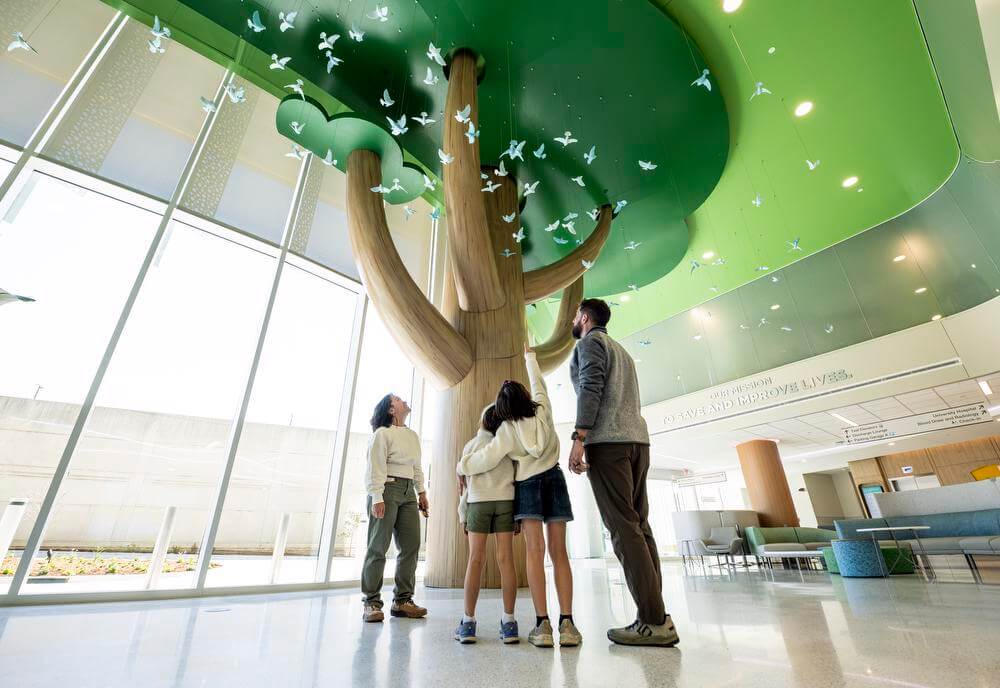
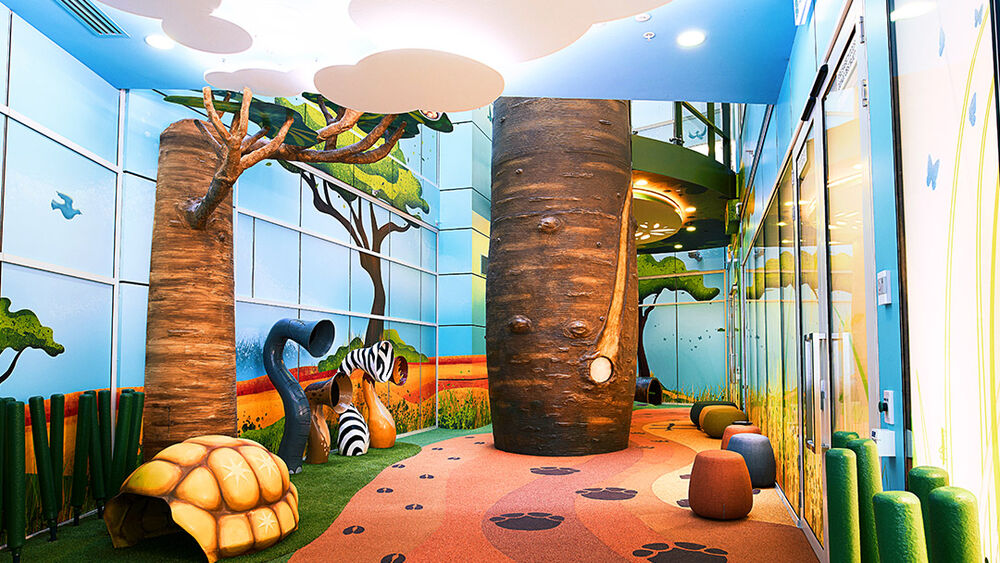
The 4-storey Moose Imagination Tree, inspired by Disney, demonstrates how immersive experiences can become a defining part of a hospital’s identity. The project also highlights that larger themed environments can involve complex stakeholder coordination, intellectual property considerations, and licensing arrangements that should be understood early in the planning process.
Perth Children’s Hospital – Perth, Western Australia
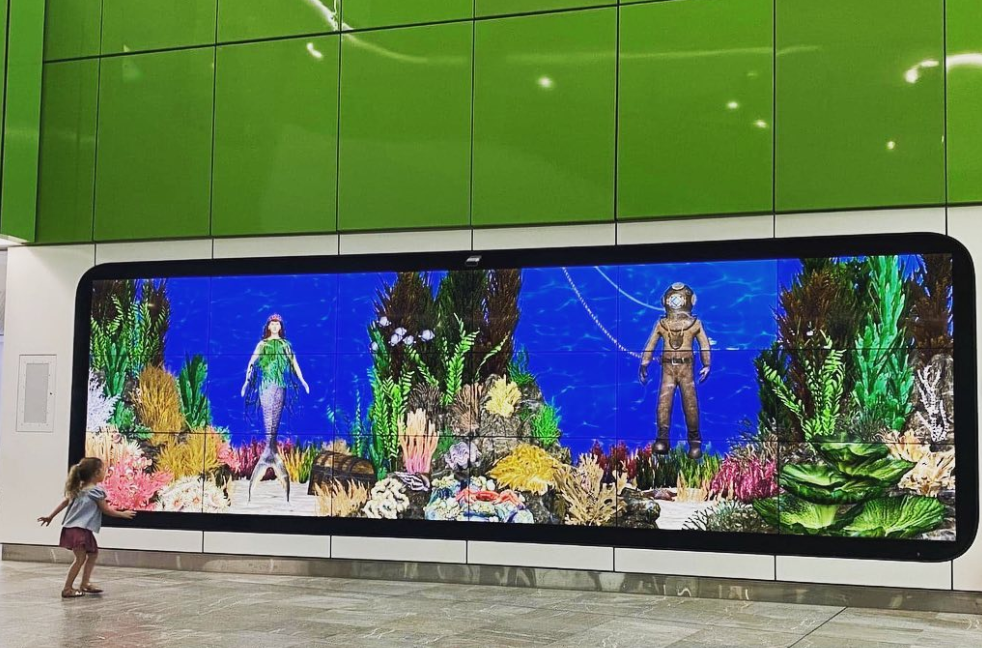
Interactive digital environments have been deployed within the Perth Children’s Hospital, utilising interactive digital displays that encourage engagement and play within public areas. These installations showcase that while the underlying audio visual solution may be relatively conventional, the success of the experience is often determined by the quality of the content and the ongoing investment required to keep the content relevant and engaging.
Monash Health, Clinical Spaces – Melbourne, Victoria
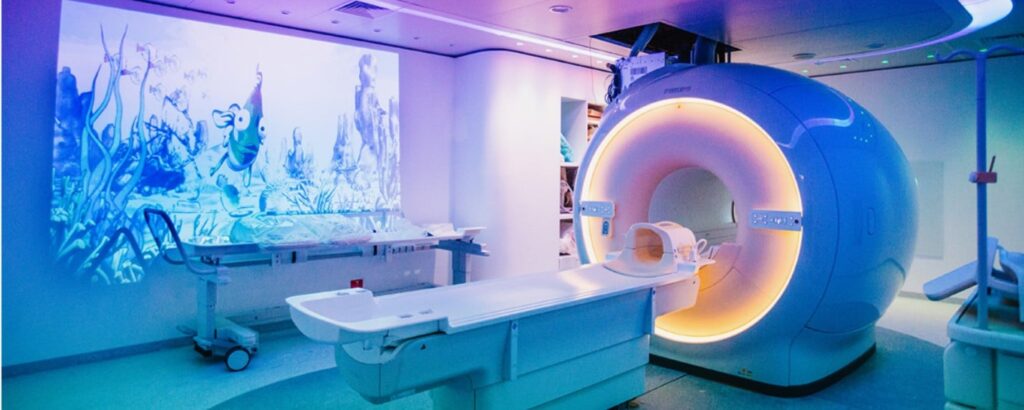
Within clinical environments, Monash Health has implemented Philips Ambient Experience systems across paediatric imaging and procedure spaces. These environments combine lighting, visual content and audio to create calming experiences that help reduce patient anxiety and support clinical workflows. Unlike public installations, the primary objective is not entertainment but improving the patient experience during diagnostic imaging and procedures.
The Future of Immersive Healthcare Technology
The next generation of healthcare environments will undoubtedly introduce new types of immersive and distraction technology solutions.
However, the most important considerations are unlikely to change.
Regardless of whether the solution is an interactive projection system, a digital video wall, an ambient experience environment, a themed architectural feature, or a technology that has yet to be developed, the success of these solutions will continue to rely on the same fundamental principles.
It is critical to first understand the clinical objective and the patient experience that is trying to be created. It is equally important to understand the operational implications of the solution, and the cost implications to support the solution for its lifecycle.
The most effective immersive environments are not necessarily those with the newest technology. They are the environments where clinicians, architects, interior designers and technology consultants have worked together to create experiences that genuinely improve patient wellbeing and support clinical workflows.
Partnering with UT Consulting
The successful delivery of immersive and distraction technologies requires a clear understanding of clinical workflows, clinical objectives, patient experience, and operational requirements.
UT Consulting has extensive experience delivering specialist audio visual, ICT and integrated technology solutions across some of Australia’s most complex healthcare projects. Our team works closely with health services, architects, and clinicians to translate project objectives into practical technology outcomes.
Whether you are planning a new healthcare facility, redeveloping an existing site, or exploring opportunities to enhance patient experiences through technology, our team can help identify the right solution for your environment.
For more information, please contact us at: +61 3 9601 6555 or email our team at info@utconsulting.com.au